Dear Wes,
Belated congratulations on becoming Secretary of State for Health. You have a huge task with the NHS, especially now the Darzi Report has arrived on your desk. Nonetheless, I’m going to invite you on a brief detour into a historical backwater of healthcare politics. You might find it informative.
NHS: a service shared by all
33 years ago a young American ethicist, Ezekiel Emanuel, proposed a plan for American healthcare comprising a menu of programmes with different priorities and options, catering for the beliefs and values of different communities and individuals. Some programmes might give more priority to life-extending treatments, others might prioritise prevention, palliative care, etc. Some would be pro-life, some pro-choice. He suggested town meeting-type assemblies of programme members (usually several thousand people) to decide the priorities of their programme.
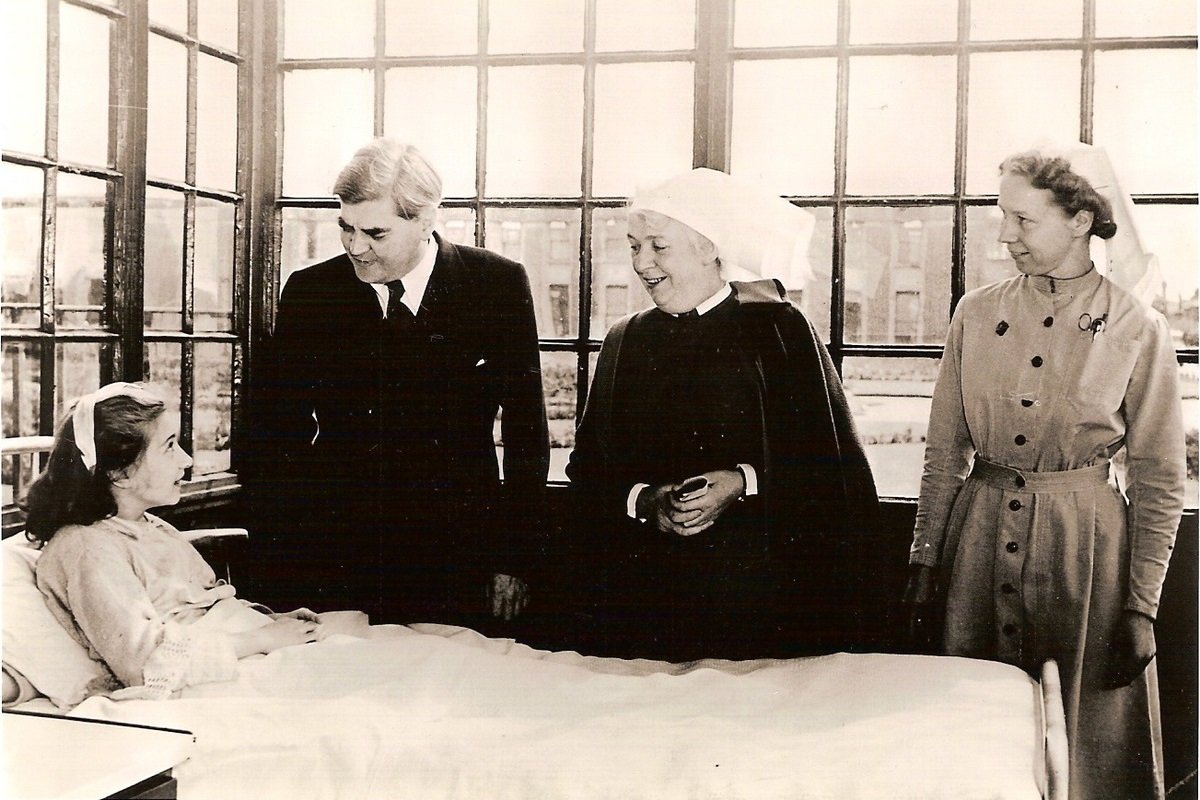
I read this in 1992 and I found his ideas intriguing. However, I had grown up with the National Health Service, a single programme for 60+ million people, created on the principle that we share our healthcare priorities as a nation. Emanuel’s proposal came from the strange world of American healthcare. We in Britain, I thought, don’t need multiple mini-programmes. We have the NHS.
Losing faith in the NHS
But 33 years on we are losing faith in that same NHS. We all know it needs more resources, but according to Darzi it isn’t just a matter of money. A lot has gone wrong, and our faith is shaken. At the time of writing, the latest scandal is Operation Bamber. Next week it could be something else. I don’t envy you Wes.
But there is a deeper corrosion of faith alongside these developments. Our trust in the NHS has historically been supported by trust in science and in the certainties that we, as lay people, believe that science provides. However, the Covid pandemic exposed the reality of science; uncertain, untidy and conflictual, all doubt and debate. That was a shock. Disillusionment with science may not have caused the upsurge of conspiracy theories during the pandemic, but it provided fertile ground for conspiracists and Covid deniers.
A question of trust
As with any democracy, our healthcare system needs to be legitimate in the eyes of the people who pay for it; that is, us. This depends on our trust in its personnel, and in the medical science they practice. That is what Fritz Scharpf calls ‘output-oriented legitimacy’. It means we accept the decisions coming from the right people with the right expertise, even though we are not part of those decisions and may not like them.
My fear is that output-oriented legitimacy is being eroded, making us less willing to accept expert decisions, and less willing to pay for the system that provides them. NHS failures and the Covid experience have generated controversies that risk alienating sections of public opinion. Priorities, resourcing, rationing and triaging constitute one bundle of issues. Freedom, dissent and whistleblowing constitute another. Some of these are being highlighted anew by the ongoing Hallett Inquiry into the UK’s handling of the Covid pandemic. Scientific evidence, traditionally recruited to resolve controversies, is itself contentious for many people. Without the anchor of output-oriented legitimacy those controversies float, unmoored, in a ‘wild west’ of theories and assertions.
However, there is another kind of legitimacy; input-oriented legitimacy (Scharpf again) offers a different kind of trust, based on responsiveness to public concerns. A decision is input-legitimate if it is visibly democratic. It may be a worse decision than the experts would make, but it’s a decision where we feel we have had input and that gives it legitimacy in our eyes. At present, input legitimacy is in short supply. Democratic accountability in the NHS is, at best, distant and convoluted. But that could change. And that is where you come in, Wes.
Openness and accountability
I’m suggesting that, as part of your reforms, you aim to make the NHS more input-legitimate, more open and accountable in the way it deals with the issues I outlined above. Emanuel’s idea of town meetings would be great for input-oriented legitimacy, but impossible when we have 60+ million members. And I guess you’d baulk at the idea of giving party politics a formal role in NHS machinery. I would too. However, there are other options.
You could create a body with responsibility for public deliberation on the more controversial questions in our healthcare system. If these questions are discussed in a balanced way, and the forum is open (that means TV, YouTube etc.), we might start to build input-oriented legitimacy into the NHS. We would need expertise in the discussions, but we would also need a strong lay representation with a wide range of views. This could resemble a committee, a conference, a court of inquiry, citizens assembly, or a mix of all four. What is absolutely crucial is that this forum has a duty to report to you, Wes, and that you have a duty to take account of any recommendations they make in your decisions.
What models do you have for this? One is the National Institute for Health and Care Excellence, which deliberates on the benefits of treatments and interventions in healthcare. However, our format would need to be simpler, more open in structure and less expert-dominated. Another is the existing network of ethics committees in the NHS, deliberating on a host of ethics issues in research and other areas. Again, our forum would need to be much more publicly visible than those, and less expert-dominated.
Avoiding exploitation
Wes, without action we risk the disintegration of the NHS. I fear private providers will exploit current anxieties, peeling off the more affluent patients who can afford a programme suiting their own particular priorities and beliefs. That would be the worst kind of privatisation. No democratic accountability, no town meetings, nothing of Emanuel’s vision; just a commercial transaction. I suspect that is not what you want.
Incidentally, Ezekiel Emanuel has had a distinguished career since 1991, but those original proposals were never acted on. I suspect too many vested interests were threatened. Perhaps we can do better.
Yours sincerely,
Stephen Wilmot