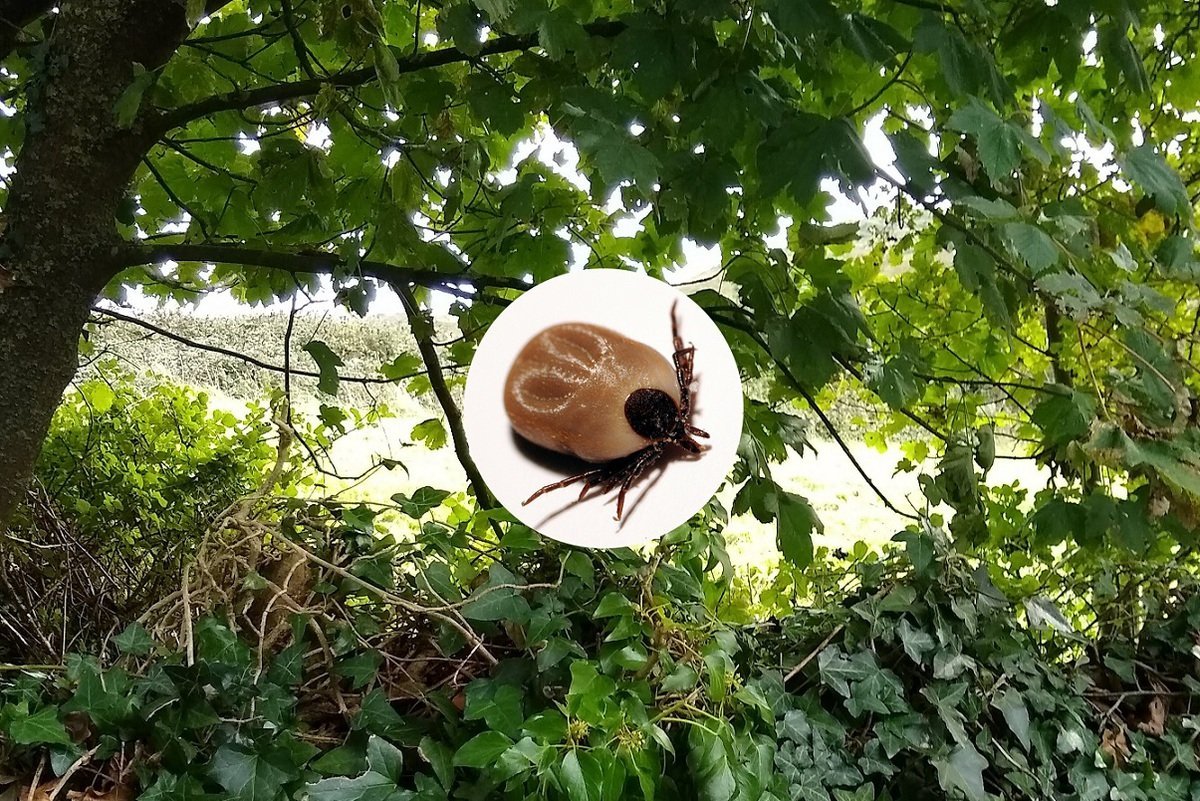
While outdoors and after brushing against vegetation, every year thousands of people catch Lyme disease, a bacterial infection from a tick bite. The US Centers for Disease Control and Prevention (USCDC) writes that approximately 476,000 people are diagnosed and treated for Lyme disease each year in the United States. In the UK, GP data showed a rapid increase in cases from 2001, reaching nearly 8,000 cases in 2012 and the number is likely to have increased since then. It is found in every region of the UK but particularly in moist and humid environments where the ticks can thrive.
Lyme disease: diagnostic difficulty
Diagnosis of Lyme disease can be difficult and a delay in treatment can easily happen. A distinctive ‘bull’s-eye’ rash, erythema migrans, can lead to a definite diagnosis of Lyme disease without the need for a blood test. The appearance of the rash can vary considerably and suspected cases will also be diagnosed and treated but many people do not report seeing a rash.
Early symptoms of Lyme disease often mimic flu or other diseases, and adding to the difficulty in diagnosis, if the blood test is done too early within four weeks of symptom onset, antibodies to the Lyme disease bacteria may not have developed, thus leading to a false negative result and a second test may later be needed. Fortunately, most people who catch Lyme disease receive antibiotic treatment in good time and have no further problems.
Post-treatment Lyme disease syndrome
An estimated 10% to 20% of people who catch Lyme disease later have what is known as post-treatment Lyme disease syndrome (PTLDS), which is associated with a delay in treatment. The symptoms of PTLDS include severe fatigue, memory problems and musculoskeletal pain, and the gradual recovery may take months or years.
Initially, some patients might be seen simply as having a mental health issue, especially if PTLDS is not recognised as a real disorder. This can lead patients to experience uncertainty and ‘illness invalidation’. This can be particularly distressing if the dismissal is coming from someone who appears to be in an official position.
The symptoms can be profound and disabling, leaving patients unable to work. A study of patients with PTLDS found that ‘illness invisibility’ also affects social support and that literal or implicit rejection by a physician can lead to lack of trust in the physician. The study also showed that the pervasive medical uncertainty regarding PTLDS promotes an increased sense of personal responsibility for care. Some turn to anyone who offers help, and however uncertain and untested it is, patients may agree to having the supposed treatment.
The Lyme wars
There have been heated disagreements for over 20 years in what has been called the Lyme wars. Some have thought that PTLDS cannot be a real disorder because antibiotics can effectively eradicate the Lyme disease bacteria. Others believe that any ongoing symptoms mean the patients still have an active infection and therefore need more antibiotics; they refer to this as chronic Lyme disease. Separately, many consider PTLDS to be a real disorder, that it is not a chronic infection and that ongoing, long-term antibiotic treatment is not the answer.
A few people in the US and in the UK have seemed unwilling to accept PTLDS as a separate diagnostic entity and they appeared to have concurred with earlier German guidelines which stated that: “So-called PTLDS is a syndrome that has not yet been scientifically defined and therefore not uniformly accepted.” Luckily for patients, and with increasing understanding of the disorder, that view has been losing support.
In contrast, there has been increasing recognition that PTLDS is real, and that this is without the patients having any signs of active infection. The term PTLDS makes it clear that the patients have already had antibiotic treatment and that the condition is a syndrome. The USCDC have clearly recognised PTLDS and write that similar symptoms have been reported following other types of infections, including Covid-19.
Long-term antibiotics are not the answer
Those who believe that PTLDS patients still have an active infection advocate long-term use of antibiotics and some patients are persuaded into having them.
There is a strong case against the further use of antibiotics in PTLDS. A review has concluded that active infection with the Lyme disease bacteria does not persist in patients who receive conventional treatment with antibiotics. The USCDC reports that studies have found that further antibiotic treatment was no better than placebo for patients with PTLDS.
The UK National Institute for Health and Care Excellence recommends no further antibiotics for ongoing symptoms following two courses of antibiotic treatment and recommends that patients should be told that symptoms may take months or years to resolve. Official US guidelines on Lyme disease also recommend against additional antibiotic therapy.
Extended antibiotic exposure damages the good bacteria in the digestive system, leading to immune system problems. During prolonged exposure, other bacteria can develop antibiotic resistance. A study has found that, in PTLDS patients given extensive long-term antibiotics, there have been significant increases in the incidence of hospitalizations, emergency department visits, and infections. Another study has reported that some patients, who acquired a serious bacterial infection while on extended antibiotic treatment, died as a result.
New discoveries: similarities with other post-infectious disorders
Attention has been drawn to how similar the symptoms of PTLDS are to those seen with long Covid and it is noticed that the same risk factors play a role in who has these post-infectious disorders. A review in 2024 writes that the many overlapping clinical features of PTLDS with other infection-associated chronic illnesses suggests that they may share common underlying mechanisms, where there is dysfunction of the autonomic nervous system as a result of nerve and tissue damage during the infection, as is seen with long Covid.
Studies have found clear evidence of inflammation in PTLDS patients without them having any signs of active infection. Chronic inflammation is linked to a wide range of conditions including other post-infectious disorders. With high inflammation, the immune system may be constantly active and this can delay natural healing. Stress and anxiety can increase levels of inflammation. However, there are ways that can help reduce chronic inflammation.
Steps to recovery and hope for the future
The ways to help recovery from long Covid may also help PTLDS patients. A healthy anti-inflammatory diet that includes a variety of fruits, vegetables, fatty fish and whole grains is recommended for people with other inflammatory disorders. The fibre in these foods helps feed the good bacteria in the digestive system which may help counter any damage that was done in the microbiome from the extended antibiotic treatment that PTLDS patients have had for the Lyme disease. Avoiding high consumption of ultra-processed foods also helps with cognitive issues that are often seen in PTLDS patients.
Gentle physical exercise, including yoga, which does not overtire the patient has been found to help reduce inflammation and can improve mental clarity and mood.
There is no magic cure for PTLDS, but the symptoms can fade over time. The human body has its own natural healing abilities although the regrowth of neurons and the formation of new neural pathways to restore the damaged autonomic nervous system is extremely slow. Studies have found, however, that the diagnosis provided patients with a sense of relief, personal validation of symptoms and hopefulness for the future. It can also help patients if they understand that, although recovery may be very slow, in the large majority of patients the symptoms do eventually disappear.
This is an update to a previously published article


Bylines Network Gazette is out!
The latest Bylines Network Gazette is out now. Become a Friend of Bylines Network or upgrade to a paid Substack subscription, and you will get access to a vital collection of citizen articles and stories.
Journalism by the people, for the people.