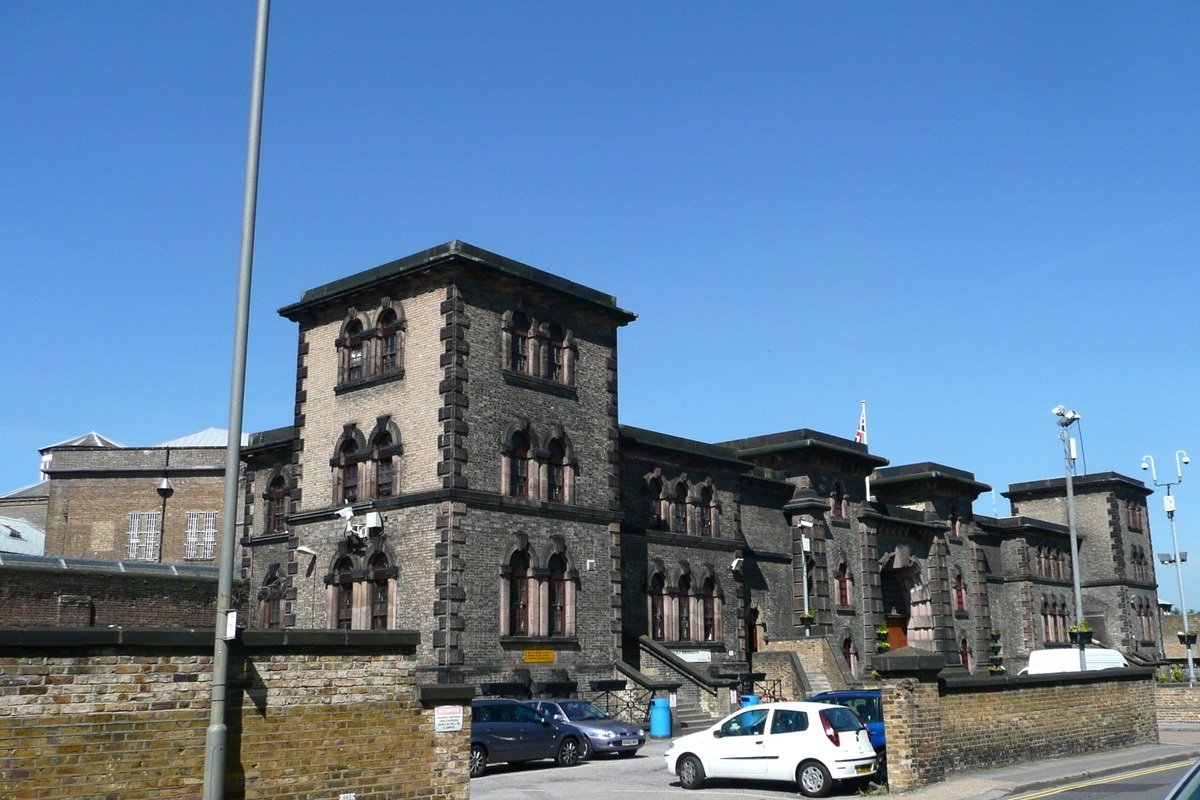
Prisons are now overcrowded because of the End of Custody Supervised Licence (ECSL) has been extended. This extension to the early release scheme now allows prison inmates to finish their sentences up to 60 days early. The UK’s Ministry of Justice hopes this change will help tackle the growing issue of overcrowding in UK prisons.
But in an exclusive interview with writer and documentary maker Chris Atkins (who served two years in Wandsworth prison for tax fraud), he argues that early release is not going to have an effect on overcrowding, but cutting down on the handout of longer sentences and changing the rules of remand and recall could.
Prisons in crisis
The extension to the early release scheme (where prisoners can now finish their sentences two months early and short sentences of up to 12 months can now be served through probation alone) made headlines after government reports showed that there are currently a record 88,225 people in prison in England and Wales and the Ministry of Justice warned that the number could go up to 106,300 by March 2027.
Issues stemming from overcrowding have been hitting hard in most UK prisons. HM Chief Inspector of Prisons Charlie Taylor recently said: “Just last week, we issued a second Urgent Notification for HMP Bristol, citing overcrowding as one of the key reasons.”
Atkins commented: “When I was in Wandsworth prison there was already not enough space for us and now it’s gotten (sic) worse with the prison population going up and them not building any new spaces.”
Overcrowding and the recall rule
In his latest book Time After Time: Repeat Offenders, Atkins outlines how overcrowding can be fixed by remodelling the way recall (the action taken by the justice department in order to bring someone back to prison) works. During his time in prison, he saw too many people being brought back through recall, making it the main cause of overcrowding. Instead of extending the early release clause, changing this rule would give UK prisons a chance of fixing the overcrowding issue before it’s too late.
Atkins said: “Around 15% of prisoners inside are being recalled because of stupid reasons, such as being late for their probation appointment or the probation officer not liking you, so they throw you back in which needs to stop in order to take some of the pressure off prisons.”
Overcrowding: little investment
Overcrowding is also caused by prisoners being kept in police cells which has become all too common. According to Chief Inspector Taylor: “At times numbers coming in have been so high that Operation Safeguard has been enacted, a protocol that means prisoners are held in police cells because there is no available space in nearby jails.”
In order to fight the issue at hand, the government announced in 2021 that there will be an additional 20,000 prison places available by the mid-2020s. By July last year, only 5,400 places had been delivered.
Atkins said: “There has been such little investment in the infrastructure and the maintenance of these buildings, you just cannot house people in bits of them, so it’s the perfect storm of more people being sent to prison whilst the budgets are being cut.”
How did we get here?
In order to truly tackle the overcrowding crisis, we must look at what has led to this situation in the first place. In Atkins’ view, the problem is “they are sending people away for longer and longer and no one is talking about it”. Research conducted by the Prison Reform Trust shows that there are now more prisoners serving 10 or 20-year sentences than ever. In 2019, 124 people received a sentence of at least 10 years in prison, four times as many as a decade previously. Currently there are 3,500 people serving such sentences.
The number of long sentences being handed out hasn’t been the only change made by the UK’s Ministry of Justice in recent years. A steep increase in people being held on remand is also filling up prisons in the country.
Chief Inspector Taylor outlined in his report that since 2020, the number of prisoners on remand has risen from 11,000 to 14,500. In Atkins’ view: “There are too many people in jail who are waiting for sentencing because the prosecution is using remand for people awaiting trial.”
Some see the increases as a step in the right direction. Conservative Lord Chancellor and Secretary of State for Justice Alex Chalk stated: “Our plan to cut crime and keep the public safe is working. We are locking up more criminals for longer: over the past decade, the average time offenders spend behind bars increased by more than 40%.” But with more prisoners having longer sentences, there is less space for new arrivals.

Overcrowding and mental health
Although statistics can give an idea of overcrowding, nothing can truly illustrate what prisoners and staff in the UK are going through mentally during this crisis. Prisoners are now sharing cells meant for one with two other inmates. Atkins said: “There is a three-man bang-up in Belmont where there is a bunk bed and a mattress on the floor in a one-man cell which is quite common. If you put animals in these conditions you’d be prosecuted because you’re not allowed to keep animals in the same conditions we keep people in.”
During the interview, Atkins outlines how prison staff are also calling in sick because they cannot handle the increase in prisoners they need to look after. This then leads to even fewer staff on duty, meaning prisoners are not getting all of their needs met. Atkins said: “Prisoners are getting locked in their cells every day for 23 or 24 hours meaning they are not getting enough exercise or any rehabilitative activities which has a huge mental health impact.”
Prison policy is failing
In 1989, the then home secretary Douglas Hurd said: “Prison is an expensive way of making bad people worse.” During his time in service, Hurd saw that the overcrowding issue could be helped by an increase in probation services and community sentences, potentially giving another idea as to how to solve this situation.
However, over a decade of austerity has undone such ideas. Prisons in the UK are failing and allowing prisoners to leave two months early is not going to be enough to fight the overcrowding. Atkins said: “Prison makes people worse. I mean it’s like going to a hospital and coming out with five more diseases than when you went in. You have to stop increasing sentence lengths and reduce the numbers on remand.
“If prison is meant to be a rehabilitation centre for people to come out better than when they came in, there isn’t any rehabilitation going on. People have just been warehoused in their cells for the whole day, so this idea that there is all this rehabilitation is complete nonsense, to put it bluntly.”