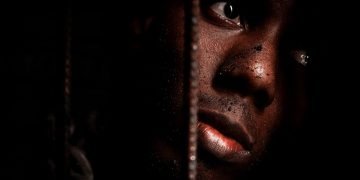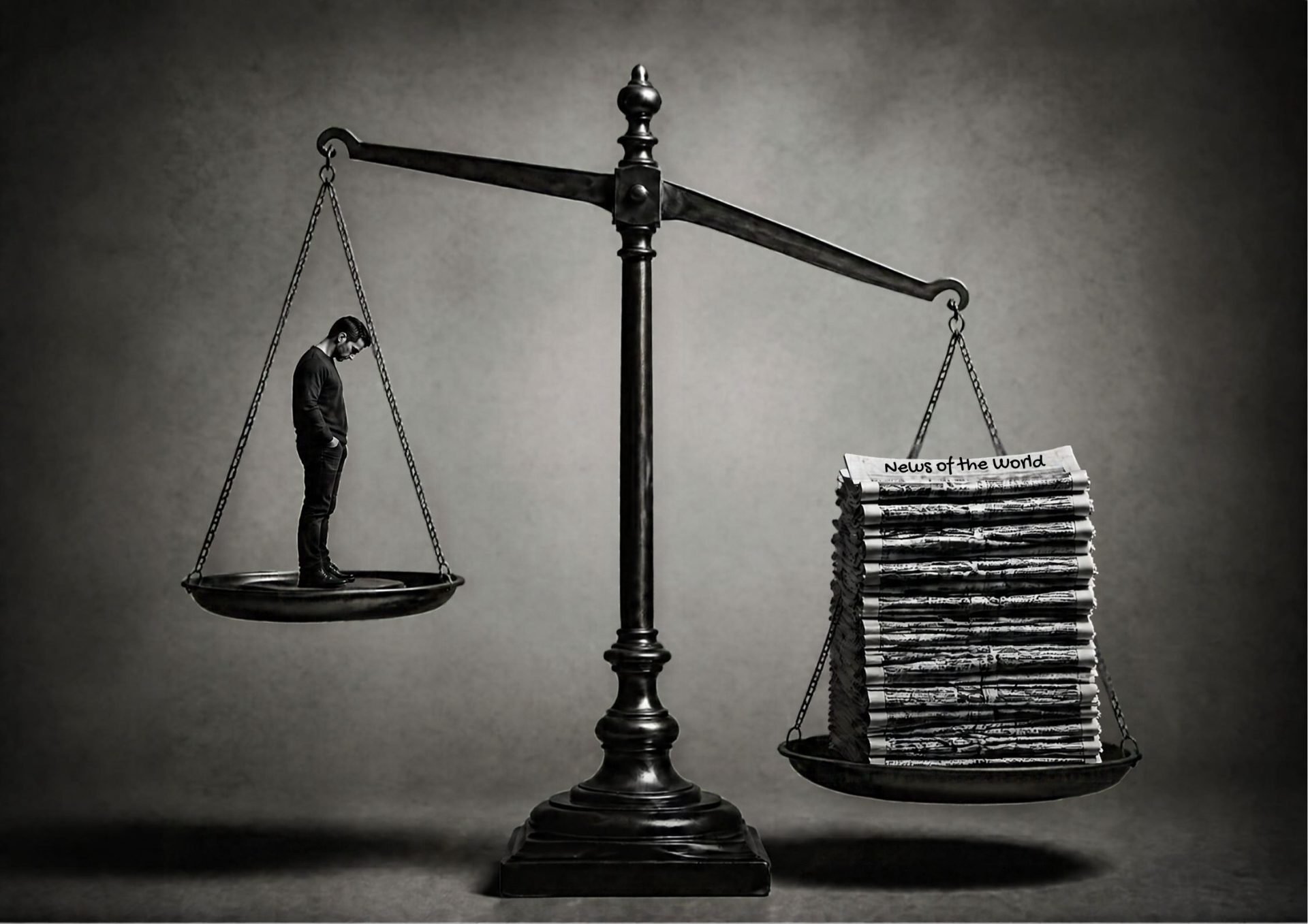
Many of us watched in dismay at how, for weeks, much of the legacy media relentlessly hounded Cambridge Professor Jason Arday over largely unsubstantiated claims of plagiarism. Tragically, after what the university’s chancellor, Chris Smith, described as a “racist feeding frenzy”, Arday was pronounced dead after his body was discovered in his Battersea home on 14 August 2026.
Over 200 pieces were written about Professor Arday and the hounding continued despite his issuing of a statement declaring that the coverage had “reached the limits of what any person should reasonably be expected to endure”. Pause for a moment and take that in. 249 pieces in 22 days – that averages out to 11 pieces per day. Principal of Homerton College, Lord Simon Wooley, later described this treatment of Professor Arday as a “lynching” and a “public assassination”.
Concerns about Arday’s wellbeing had been raised while the media scrutiny was ongoing. On 31 July, Cambridge academic Professor Simon Baron-Cohen publicly warned that the relentless coverage of a vulnerable neurodiverse man raised serious safeguarding concerns. Supporters also contacted journalists and media organisations directly, urging greater consideration of the potential consequences. Despite these warnings, much of the reporting continued unabated.
It mattered not that an investigation by Liverpool John Moores University had cleared Professor Arday of the plagiarism allegations in question. It also mattered not to some in the media that Nathan Cofnas, the academic who instigated the pile on via a Substack post, has described himself as a “race realist” and “hereditarian”. It also mattered not that Cofnas, in 2024, wrote that in a true meritocracy black people would “disappear from almost all high-profile positions outside of sports and entertainment”.
A troubling double standard?
Cofnas failed to have his tenure at Emmanuel College, Cambridge renewed after the college considered his views incompatible with its commitment to equality, diversity and inclusion. The controversial – and discredited – nature of Cofnas’ publicly expressed views on race, however, appears to have attracted considerably less scrutiny than the allegations he levelled against Professor Arday.
Professor Arday was not a public figure in the traditional sense. He was not someone who figured prominently in the everyday affairs of the nation. In terms of proportionate reporting, there is little reason as to why the press felt this story was of such high public interest – unless we consider the question of whether the reporting would have been the same had Arday been a white professor.
In 2023, Professor Arday’s Cambridge peer, Dr William O’Reilly, was found by a university disciplinary tribunal to have plagiarised a student’s work, although the tribunal concluded that his actions were negligent rather than deliberate. He retained his position. The case was investigated by Cambridge student newspaper Varsity and reported in the Financial Times.
That’s one article in the established press. One.
An all too familiar pattern
This is not the first time that the legacy media have hounded someone. In December 2010 Joanna Yeates was tragically murdered. Her landlord, Christopher Jefferies, was arrested on suspicion of murder and later released without charge. The legacy media went to town on him, hounding him, doorstepping him, digging up all aspects of his life. After the real suspect had been arrested, Jefferies’ life was left in ruins.
In 2011, Jefferies successfully sued eight publications and won an undisclosed settlement. Subsequently, two publications, The Sun and The Mirror were found to have broken reporting restrictions, putting the trial of the perpetrator at risk. They were both found in contempt of court and fined.
Even after the real perpetrator was charged and subsequently found guilty the legacy media continued to publish sensationalised articles on Jefferies. Over a decade later in 2025, he would later win further damages from The Sun and the now defunct News of the World along with an apology.
Leveson Inquiry – a press dangerously out of control
Many will recall the reason behind why the Leveson Inquiry was instigated. In 2007 Clive Goodman, then royal editor at the now defunct News of the World and private investigator Glenn Mulcaire were found guilty of illegally intercepting phone messages. At the time the News of the World made assurances that this was a one off, as if that somehow justified what had happened, however The Guardian was quick to refute this claiming that there was evidence in existence that showed a pattern of behaviour and that the practice of phone hacking extended beyond Goodman and Mulcaire.
In the wake of a civil suit brought by actor SIenna Miller in which the News of the World settled in 2011 the Metropolitan Police opened an investigation, Operation Weeting, into the newspaper. During the course of this investigation they found evidence that reporters at the News of the World had hacked the voicemail of Milly Dowler, who at the time of the hack was missing, later found murdered. The allegations and subsequent discovery pertain to the disappearance of Milly Dowler who went missing in 2002 and her body was found six months later. The hacked voicemails were used by the newspaper for articles during the search for Milly Dowler. Most notably in a front page article titled “Milly Hoax Riddle”.
The public outcry in the wake of these revelations led the then prime minister, David Cameron, to order an inquiry into the phone hacking and police bribery at News of the World. The resulting Leveson inquiry would also examine the wider culture, practices and ethics of the press. The police investigation continued and uncovered further victims spanning the scandal that lasted from the 1990s until 2011.
A history of putting publications and viewer numbers before people
Some of the victims and survivors of the 7/7 London Bombings were told by police that they may have had their phones hacked. Sara Payne, whose daughter had been kidnapped, molested and murdered, was also told that her phone was on a so-called “hack-list”. This latter incident caused a stronger reaction than that of the Milly Dowler case as Rebekah Brooks, who had been an editor at News of the World had been instrumental in the bringing about of Sarah’s Law and had become a close friend of Sara Payne, the very person whose phone her newspaper had allegedly hacked.
It also found that the families of British soldiers who were killed in action in Iraq since 2003 and Afghanistan since 2011 may also have been hacked as personal details and phone numbers of the families were found amongst Glen Mulcaire’s files. The Royal British Legion upon hearing this severed all ties to the News of the World.
In the wake of these allegations that all came out in July 2011 many of the companies that advertised in the News of the World pulled their adverts. On 7 July 2011 James Murdoch, son of billionaire press mogul Rupert Murdoch, announced that after 168 years the News of the World would publish its last edition, doing so on 10 July that same year.
Several other newspapers under the banner of News Corporation were also investigated over phone hacking and other illegal activities. The most notable of these were The Sun and The Sunday Times. Notably, The Sun faced allegations that it had improperly obtained the medical records of former prime minister Gordon Brown’s infant son so they could report on his cystic fibrosis diagnosis.
The Leveson Inquiry concluded in 2012 and published its report in November of that year. In which it found that the Press Complaints Commission (PCC) was not sufficient, and recommended a new independent body be set up which would have a range of sanctions at its disposal. The PCC would be shut down in 2014 and replaced with IPSO (Independent Press Standards Organisation), however, IPSO did not adopt the system of independent oversight envisaged by Leveson, leaving significant questions about the effectiveness and independence of press regulation unresolved.
Cameron pledged a Leveson part two inquiry, which was specifically designed to look at the relationship between journalists (specifically those at News of the World) and the police, however in March 2018 Matt Hancock announced that it had been deferred indefinitely and that it would no longer go ahead. Stating that the media landscape had transformed and that the criminal trials had concluded. Labour had campaigned in 2017 in their manifesto to fully implement part one and to also commence part two. However, that pledge was missing from their 2024 manifesto and despite numerous calls for it to be revived the culture secretary, Lisa Nandy, has as yet refused to commit.
Has the media changed?
Given the magnitude of the News of the World phone hacking scandal one would have assumed the press would have become better regulated. That they would be held accountable for their actions. Not by way of a small retraction or apology on a page no one ever reads, but responsibly and consequentially accountable. However, this is often not the case. Sensational and lurid headlines dominate certain fringes of the legacy media. In 2015 The Sun’s frontpage dominated with a headline that read “1 in 5 British Muslims’ sympathy for jihadists”. In 2016 IPSO ruled that this headline was misleading and the newspaper was forced to issue an apology and retraction. Several community groups criticised the headline and claimed that it had led to a rise in hate crimes against Muslims at a time when feelings were heightened. This was three years after the conclusion of Leveson.
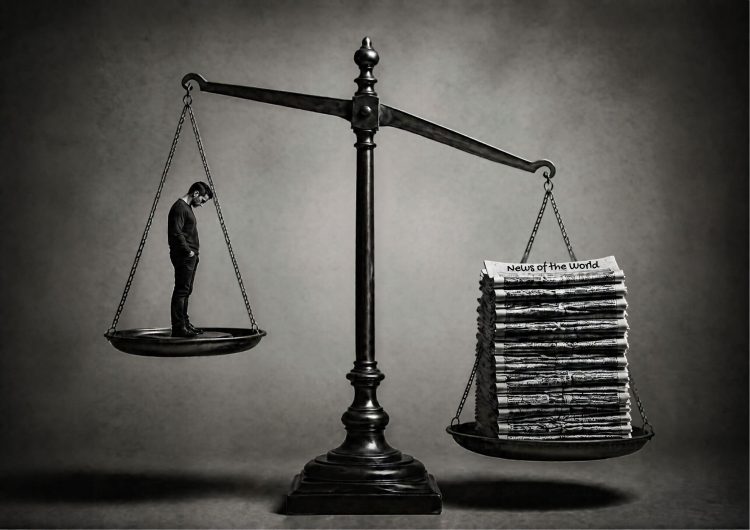
Given what we have all borne witness to with the frenzied press hounding Professor Arday it seems that in terms of accountability we are no further on. Freedom of expression does not mean freedom from consequences. The legacy media has a duty to report accurately and fairly, to report in the public interest but to do so legally, morally and ethically. Was it in the public interest to publish 249 hit pieces on one individual? Was it in the public interest to continue to publish after pleas for restraint? Arguably not. Nearly 14 years after the Leveson Inquiry, there are elements of the establishment press that may again find themselves drenched in culpability.

Bylines Network & No One Above
Where is justice? Survivors voices in parliament
NOA and Bylines Network are collaborating to make sure those voices are heard by the decision-makers who can remove the roadblocks to justice and address systemic failures of accountability.
Your support will allow us to put Gazettes in the hands of all MPs and make the campaign visible around parliament.