


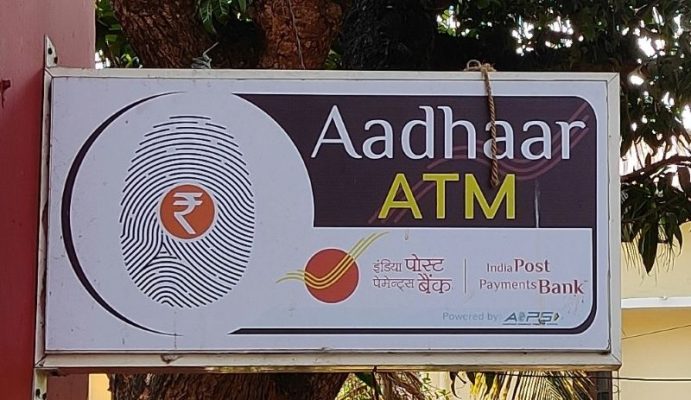
“In India, the government has saved around US $10bn annually by reducing fraud and leakages in welfare schemes.” That quote comes from the Starmer government’s announcement to roll out a national digital ID – or BritCards – scheme by the end of parliament. Intended to be a mandatory part of Right to Work checks, the announcement sells the scheme as both a modernisation project streamlining citizens’ access to public services and as an immigrant crackdown, aiming to curb “illegal working” by those with “no right to be here”.
Backlash from the public and civil rights groups
The scheme has seen severe backlash, with a petition against it being signed by more than 2.9 million people on the UK Parliament website (due to be debated on 8 December). A letter signed by several rights organisations including Big Brother Watch, Liberty, and the Open Rights Group, has argued that the system would simply “push unauthorised migrants further into the shadows”, deepening their existence as a precarious underclass of exploited labour.
If implemented ethically, digital ID could streamline access to government services. Ronnie Das, writing for the London School of Economics, has pointed to Europe’s SOTERIA project and Australia’s myID system as positive examples, both of which privilege user control over information and have had their use limited to specific services. Postdoctoral researcher Alex Hardy draws from Estonia’s ‘X-road’ system to argue that digital ID could “modernise the British state”. But as critics have suggested, such a scheme also has the potential to supercharge oppression and marginalisation – as has already been shown in India.
India’s Aadhaar: the world’s largest digital ID system
Though it doesn’t mention the system by name, the government’s announcement is referring to India’s Aadhaar infrastructure. The Aadhaar system links individualised 12-digit numbers to personal data – addresses, phone numbers, eye scans, fingerprints and photos – stored by the Unique Identification Authority of India (UIDAI). The UIDAI was founded in 2009 by the Congress Party, with Nandan Nilekani (founder of the multinational technology company Infosys and credited as the architect of Aadhaar) appointed as its first chairman.
Since its implementation, Aadhaar has become the world’s largest biometric system, processing up to 80 million authentications each day and (according to the government) has been assigned to 99.9% of India’s adult population and saved up to $10bn in administration costs (though this figure has been disputed). While Aadhaar numbers do not function as proof of citizenship or residency and are not mandatory, they are required to file taxes, access over 200 welfare programs, and partake in key aspects of day-to-day life.
With the numbers that India’s government claims, it’s not surprising that Aadhaar is attractive to Starmer’s managerialist cabinet. On 8 October, Starmer met with Nilekani to discuss what the UK could learn from Aadhaar’s implementation, praising the system to journalists as a “massive success”. But, in this praise, Starmer and his government are conveniently ignoring the major controversies that have plagued Aadhaar for years now.
One of these controversies is Aadhaar’s insecurity. The system faced several major breaches compromising up to one billion Indians’ personal information. A survey by civic-tech company LocalCircles reported earlier this year that 87% of the population believes their personal data is likely accessible online as a result of these breaches, demonstrating the damage done to the citizenry’s trust in Aadhaar. Critics have also pointed to incidents in which technical issues have halted pension payments and subsidised food allowances, including several instances of starvation-related deaths among rural families, having been linked to Aadhaar-related complications.
How Aadhaar became an ethno-nationalist tool
Perhaps most concerning is the marginalisation of India’s Muslims. On the same visit in which he spoke to Nilekani, Starmer met with Indian Prime Minister Narendra Modi, whose far-right Bharatiya Janata Party has held power since 2014. The BJP ascribes to Hindutva ideology, propounding that those of Hindu faith should be afforded cultural dominance within India and that the country’s Muslim population should be suppressed. With ideological bases in European fascism, this belief system is fundamentally ethno-nationalist if not outright fascist. Before ascending to political power, Modi spent his youth as a full-time activist for the century-old Hindutva paramilitary organisation RSS, from which the BJP began as a political offshoot.
Though Starmer has praised Modi’s India as “the world’s largest democracy”, under his rule the country has seen the widespread political disenfranchisement of India’s Muslims as well as notable violent pogroms. Two of the most severe include the 2002 Gujarat riots – which Modi has been repeatedly accused of having abetted – and the 2020 Delhi riots. The passing of the Citizenship Amendment Act in 2019 and the publication of a National Register of Citizens in 2019 have also disproportionately excluded Muslims from citizenship, signalling the government’s codifying of Hindutva ideology into law.
Aadhaar has played a crucial role in this. The government’s conferment of citizenship (or lack thereof) has been noted by scholars and international rights groups as one of its strongest tools in persecuting Muslims. Its use of Aadhaar functions similarly; American politician and social activist Nika Soon-Shiong has recently explored how the exclusion of Muslims from the National Register of Citizens led to the same communities being denied enrolment into Aadhaar.
As Soon-Shiong writes, “restrictions on Aadhaar access are now wielded as punishment for even facing accusations of being a foreigner.” The fact that Aadhaar is increasingly necessary for accessing essential state services means that this amounts to the large-scale technologically-enhanced ostracism of marginalised communities from Indian social life, in accordance with Hindutva ideology. Especially concerning is the recent e-Foreigners Tribunal app, which uses UIDAI data to identify and track suspected ‘foreigners’/non-citizens. As Soon-Shiong notes, the development of this software alongside the Home Ministry’s 2019 order for all 28 Indian states to build large-scale long-term foreigner detention facilities suggests a dark future for India’s Muslims and other marginalised communities.
India warns us of a fascist future
I don’t believe that Starmer’s Labour has launched the Brit card scheme with the fascistic intention of removing ethnic ‘others’ from British life. It would, though, build the infrastructure for any government to do so if they wished, and the rapid rise of Reform U.K. suggests this is a very possible future. With its weaponization of Aadhaar in India, the BJP has written a roadmap for how to do so.
Soon-Shiong notes that Aadhaar has already started to spread worldwide, with the Gates Foundation praising its ability to deliver social welfare programs to the public (conveniently ignoring India’s Muslims) and offering grants to countries to develop their own Aadhaar-like systems through the World Bank’s Identification for Development (ID4D) initiative. This precedent could be dangerous. OpenDemocracy has argued that India gives a window into what awaits Britain under an Aadhaar-like system: “mass surveillance; a denial of services to the elderly, the impoverished and the infirm; compromised safety and security; and a fundamentally altered relationship between citizen and state”, where any failure in verification can turn an everyday interaction into a criminal breach. In selling the plans to the public, the Labour government will have to demonstrate foolproof safeguards that can keep the Brit card from being weaponised against the marginalised. In doing so, it will have to acknowledge and learn from India’s crimes against its Muslim population.



