


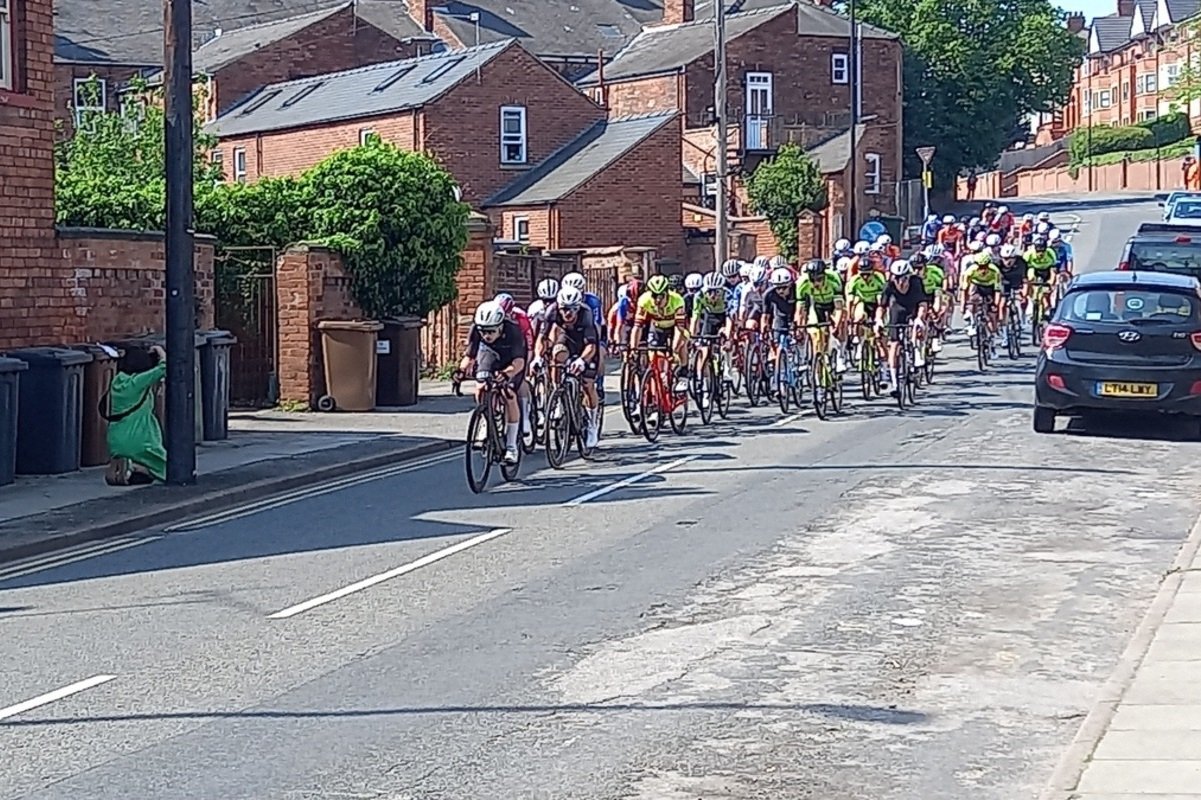
The Lincoln Grand Prix is a cycle event that visits the city every May. It started in 1956 and is the oldest cycling race in the United Kingdom still running today. It’s part of the National Road Series of races, has attracted some notable names in the past including Mark Cavendish, Sir Bradley Wiggins and Dame Sarah Storey and in 2021, the event formed part of the UK’s national championships.
Since the boom in cycling that followed Britain’s successes in the sport after the 2012 Olympics, it’s keenly anticipated in the city. Teams arrive from all over the United Kingdom along with plenty of their supporters and friends and the races attract lots of spectators, providing a real boost to local businesses.
Lincoln Grand Prix 2024
The latest event took place over the weekend of 10-12 May. There were two parts to it. The Sportive is for cyclists of all abilities. It started out on Saturday 11 May and took entrants out into the Lincolnshire Wolds on courses of up to 100 miles (for the serious club cyclists; there are other, shorter routes for those less keen or fit). Then on Sunday 12 May, the two main events for professionals were held, one for women and one for men.
Spectator interest is concentrated on these two races. Each consists of a series of 13km laps of the course. Each lap begins and ends in Castle Square, in the shadow of Lincoln Cathedral. The route passes along Bailgate and under the Roman Newport Arch, before heading north out of the city along Ermine Street, turning onto Burton Road and out into the countryside. It reaches the village of Burton, sweeps down a steep hill and onto the A57, before returning to the city via Long Leys Road.
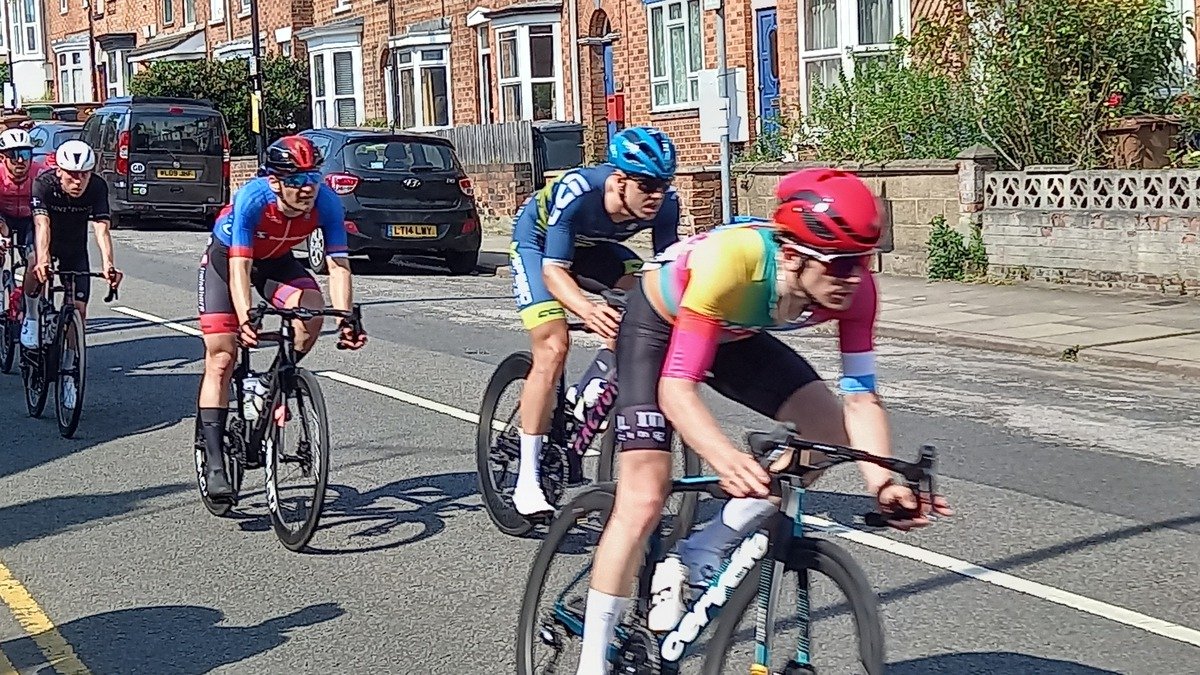
The Michaelgate Climb
There is plenty of room to watch at any of these points but the real interest for spectators is the infamous Michaelgate Climb. This is reached after a rapid descent of Yarborough Hill towards the city centre. At the bottom, there’s a sharp left-hand bend where the road narrows significantly. Positioning is everything at this moment: get it wrong and a rider has little or no chance to recover before the climb. Get it really wrong and, at speeds of up to 45km per hour, the likely outcome is a face full of tarmac or worse.
Michaelgate has earned its reputation as the highpoint of the race. It’s a relatively short climb in distance terms but is made really demanding by three key features: the gradient is 1 in 6, the street itself is very narrow and cobbled and at the top, riders are faced with a left-hand and then a right-hand hairpin bend in quick succession that lead to the start and finish line. Spectators line the route within touching distance of the riders, who often climb four and five abreast. Anyone able to do so seeks the smoothness of the gutters that line the climb. A nudge could easily bring someone down. The result would be chaotic.
The rhythm of the race
Races tend to follow the same rhythm. After the initial excitement, the riders sort themselves out to form the peloton. The better riders don’t show their hand too early, referring to hold position, ride with team mates, conserve energy and wait, until the moment comes to attack.
In the final couple of laps, the leading bunch will be thinking much more tactically about when to make a move and where. Sometimes breakaways occur on the A57 stretch which is flat, wide and relatively smooth. If you can get away then, you have a good chance to reach Michaelgate in front of the rest, thereby avoiding a sprint up the final climb. After nearly 100 miles of racing, that’s not attractive but it’s often where the race is won.

Organisational challenges
Inevitably, organising such an event is a challenge to the city council. The route is very well marked and marshalled and where roads need closing to let the racers through, it’s for as short a time as possible. Plenty of notice is provided and in the main, other road users aren’t affected.
Nonetheless, some drivers seem to consider any change as an affront to their right to use a car whenever and wherever they like. In spite of warning notices suspending on-street parking (a common feature of the city centre), it’s not uncommon to see the instruction ignored and twice in consecutive years, I’ve watched drivers attempt to drive past barriers as the peloton was hurtling towards them.
Despite such thoughtlessness, the event continues to be popular. Lincoln doesn’t get many sporting events that have national significance. The Grand Prix is one. Long may it continue.

CLICK HERE TO DONATE TO OUR CROWDFUNDER
HELP US BECOME STRONGER SO THAT WE CAN CONTINUE TO DELIVER POWERFUL CITIZEN JOURNALISM!



