


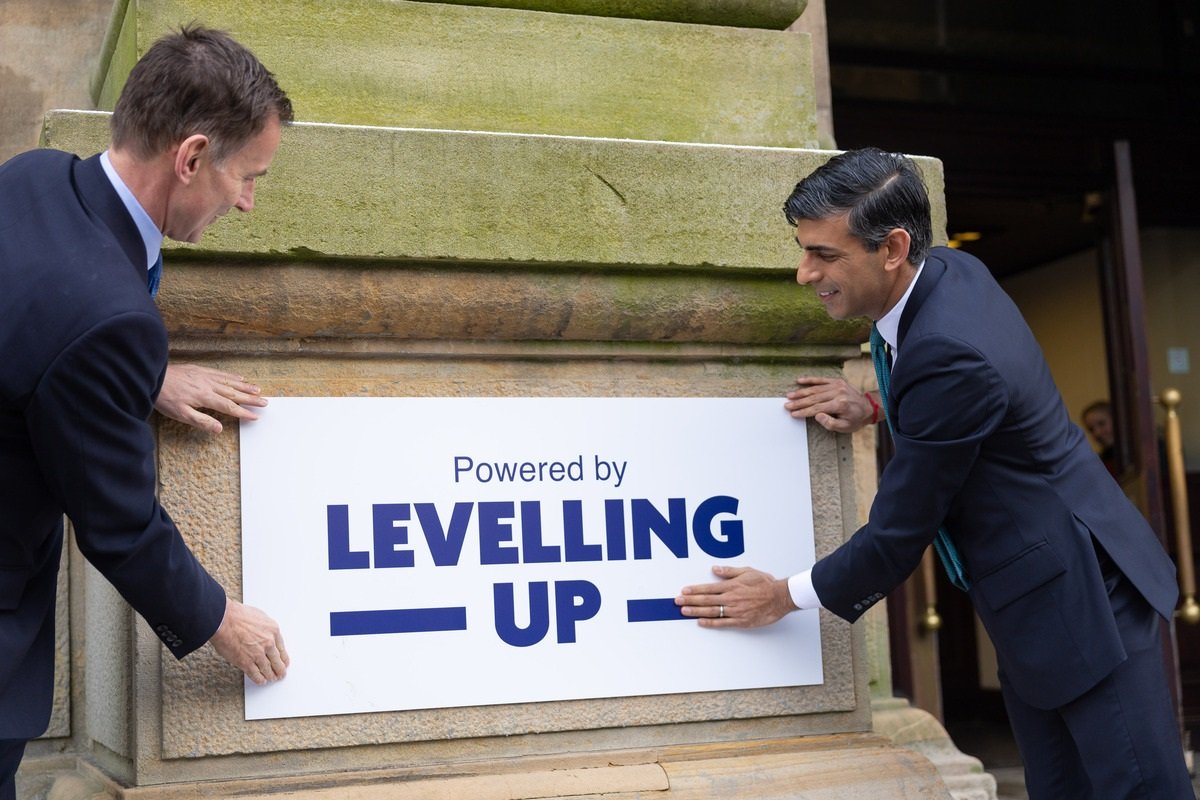
The levelling up scheme is falling short. Funding figures have not been met and the complicated rules regarding the rounds of funding have made it harder for regions to gain financial support.
Locals in Birmingham have made it clear that no improvements can be seen in the region and have started asking questions about the little money that has been invested.
The announcement of the levelling up scheme in 2020 unveiled a six-year plan which would see more than £10bn spent on reducing geographical inequalities across economic and social infrastructures in the UK. The parliamentary report from the House of Commons Committee of Public Accounts notes that four years on, a mere £3.7bn has been received by local councils. Only £1.2bn has actually been spent across the nation and is making a difference in people’s lives.
According to the report, over 80% of the projects which have been funded so far have already missed their March 2024 completion deadline, showing the levelling up plan is currently failing. Local eyebrows are beginning to be raised.
Expectations vs reality
One thing the interviews revealed was that people expect different things when they hear the phrase ‘levelling up’, creating confusion amongst the public and ultimately making it impossible for the scheme to please everyone.
Birmingham local Umar has lost faith in his government. He said: “I feel like sometimes schemes can just be a ploy for the government to say they are investing money, so if you could see the improvements it would be better.”
Local father Richard said: “To me it would mean knocking the whole thing down”, whilst for Jake the phrase means: “To do better than they’ve done before.”
Some of the interviewees showed their confusion with levelling up. Michael said: “I’ve got no idea, it’s a political term isn’t it.”
Despite there being a range of opinions on what the phrase means to them, everyone seemed to agree that there haven’t been any improvements in Birmingham. George said: “I think it’s all rubbish because what even changes in Birmingham, the slums are still there.”
He continued: “There is a hospital in Smethwick which they said was going to be complete in 2018 but it got put on a delay and still isn’t finished.” The building in question is the Midland Metropolitan University Hospital which plans to open its doors this autumn, six years after the initial proposed opening.
Rules of the game
One of the reasons people are not seeing changes despite supposed funding having been received by local governments, is the rules that come with the money.
When the levelling up scheme was announced, recipients were told the money would be handed out in three separate rounds. However, as described in the parliamentary report, it wasn’t made clear that if you were successful in the first round, you were automatically less likely to receive any money from the second or third rounds. This left local governments spending time and money on applying to the additional rounds, needlessly.
Even if they received some money in the first round, it often wasn’t as much as was bid for. This left many sending in pointless applications for the second and third rounds of funding, which they need to increase their local government grants.
Locals showed their disagreement with this rule. Umar said: “The scheme doesn’t make much sense if areas are still struggling after the first round of investment.”
Locals were not the only ones left with complaints regarding the allocation of the funding; former West Midlands Mayor Andy Street tweeted: “I cannot understand why the levelling up funding money was not devolved for local decision makers to decide on what’s best for their areas.”
Currently, it’s the government that gets to decide which projects within each region deserve the funding, which is what Andy Street is hoping would change.
The Shadow Secretary of State, Lisa Nandy, also showed her frustration with the fact that certain areas will receive funding and others won’t. She said: “It’s a one-off pot of money that pits communities against each other and creates winners and losers.”
Love it or hate it
Regardless of the rules, there was some gratitude for the little money that has been invested and reciprocated among most of the locals we approached. Amar said: “You can see a bit of difference and I think in the future we will see further improvements.”
When asked if they would like to see the scheme get scrapped, there was a divide between opinions. Certain people like Jake said: “Keep the scheme going definitely”, supported by Richard who said: “We got to see what it’s going to do, so keep it.”
Others seemed to have no faith in the scheme because of what they’ve seen so far. George said: “I’d like to see the scheme scrapped and investments made differently.”
This difference in opinions regarding the scheme seems to disappear when it comes to seeing real difference on the ground though. No one said they had seen improvements in Birmingham. George summed up the mood: “At the end of the day, what are the investments made into because we don’t see no change.”
Perhaps the general election will bring about a positive outcome. We can only hope.

CLICK HERE TO DONATE TO OUR CROWDFUNDER
HELP US BECOME STRONGER SO THAT WE CAN CONTINUE TO DELIVER POWERFUL CITIZEN JOURNALISM!



