


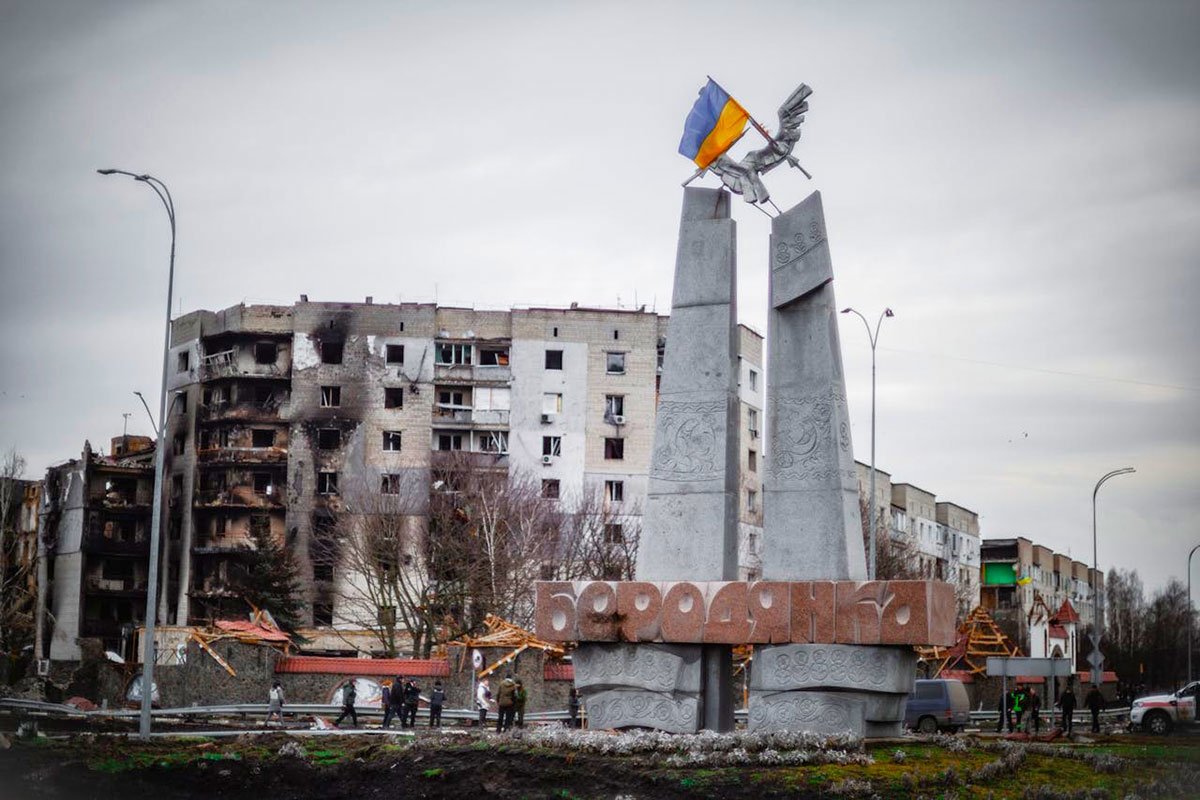
24 February will mark the third anniversary of Russian military units rolling into Ukraine. Initially a huge story, the news cycle has moved on. So, as we approach the anniversary, we can take stock and ask what the future holds and how the stalemate might be resolved.
Doughty Ukraine resistance halts Russian progress
When Putin’s forces invaded, they expected to take the country quickly. However, the Ukrainian army, composed of both professional soldiers and hastily trained volunteers, offered much more doughty resistance than Russian military planners anticipated. The resistance of the Ukrainians has changed international perception of Russia’s military might.
In December 2024 President Zelenskyy reported 43,000 dead Ukrainian soldiers with 370,000 wounded. Russian casualties were claimed to be just under 200,000 dead, with over 550,000 wounded. Civilian casualties were estimated at 10,000 injured or dead.
Ukraine has shown significant resilience and has increased its defence production. It has also maintained a surprising degree of economic stability, despite the disruption and the cost of the war effort. While Russia has made some gains in the east and the Donetsk region, Ukraine has reclaimed some territory in the south. After three years of fighting, neither side can claim to be making significant progress in military terms.
A profound impact on the Ukrainian people
Daily life in Ukraine is profoundly impacted by the war. The conflict continues to claim civilian casualties. Ukraine faces challenges due to its smaller population and reluctance to draft its youngest citizens for the war effort. Approximately 3.7 million people are displaced internally in the country, with another 6.7 million refugees abroad.
The Ukrainian economy is heavily geared towards supporting the war, causing shortages in various sectors, including labour. Unemployment is high at 16.8% with a critical shortage in specific roles such as drivers, due to workers leaving the country or joining the military. Inflation is also high, affecting the cost of living.
The Russian military strategy of targeting utilities, especially electricity generation, has led to energy blackouts and negatively impacted Ukraine’s industrial capacity. Many areas lack basic services including water and electricity. Agricultural capacity has been badly affected, reducing food production and leading to shortages in some regions. The war has also caused significant damage to the environment. For example, the Donetsk region suffering from the impact of the fighting and the Russian occupation.
Imposing a serious toll on health
The continuous fighting has imposed a serious toll on the health of the population. Poverty has increased, with an estimated 9 million people in need, up significantly from before the war. The toll on civilians, especially children, is severe; a recent BBC article, citing a report in The Lancet, claimed that 54% of the population has PTSD, with 21% suffering from severe anxiety. Over a quarter of the population suffers from depression. Various Ukrainians regularly post on social media, notably Xenta and Yaroslava Antipina, who talk regularly about the daily challenges of life in Kyiv, dodging bombs and missiles. Leading politician Kira Rudik also regularly provides updates on the country’s needs for military and other aid.
Prospects for resolution
The prospects for resolution in the Ukraine conflict are complex, and mostly not hopeful. On the diplomatic front, there appears to be increased US-Russia contact seeking a resolution, with President Donald Trump promising to end the war quickly. These efforts currently seem to have had little impact due to the entrenched positions of both parties. Trump’s administration has hinted at a strategy of “peace through strength“, a rather vague concept which they do not define. This may involve a ceasefire and leaving occupied territory in Russian hands but is unlikely to be acceptable to Ukraine.
The recent announcement by Pete Hesgeth, the US Secretary of Defense, that the US is starting negotiations with Russia will not fill Ukrainians with confidence; he asserts that Ukraine joining NATO is an “unrealistic objective” and that Europe should be responsible for protecting Ukraine.
The ongoing military situation shows no immediate signs of de-escalation. Russia has gained territory, particularly in eastern Ukraine, with significant losses on both sides. The fact too that the Donbas region has rich mineral resources, especially lithium, means that Russia will be reluctant to return its gains there.
Putin also has significant problems with the Russian economy resulting from the expense of the war and coupled with the effect of sanctions imposed in response to Russia’s aggression. The impact of the loss of many young Russian lives due to war casualties is also a pressure.
Putin has, however, dismissed suggestions of talks with Ukrainian President Volodymir Zelenskyy.
Little comfort for Ukraine from Trump
The need for weapons is also a huge drain for both sides. Russia has had to go to both China and North Korea to help fund and resource its weapons. Ukraine is constantly seeking Western aid with their weapons.
The European nations have been sometimes dilatory in providing this aid, not always reflecting that Ukraine is essentially fighting a proxy war with Russia on their behalf. Total defeat for Ukraine would bring Russia back to the border of the European Union.
The US has maintained military aid to Ukraine, although we are still in the early days of the second Trump presidency. During his presidential campaign, Trump claimed that he would stop the war in 24 hours , which clearly hasn’t happened. A fear for Ukraine is that Trump may reduce or withdraw aid, insisting on an agreement ceding occupied territory to Russia. Trump’s apparently increasingly erratic behaviour cannot be a comforting prospect here from a Ukrainian perspective.
Ukraine hopes for a ceasefire but insists on Ukrainian sovereignty and territorial integrity. Public opinion in Russia also shows varied support for the war, influenced by the economic and military costs.
A bleak and uncertain outlook without significant change
On current scenarios, the prospects for a swift resolution to the conflict are bleak. Without a significant change in at least one variable, the war looks set to continue for the foreseeable future. There are some factors which could change this.
A shift in Russian strategy or public mooddue to economic pressures or political changes might change the Russian will to pursue this war. Putin is reputed to be very ill; were he to be incapacitated or die, the Russian stance on the war would be uncertain.
A significant change in US policy under Trump’s administration might also shift the balance. A unilateral decision by Trump to withdraw aid and/or attempt to coerce Ukraine into accepting an outcome they currently consider unacceptable, would be a seismic change.
Significant changes to the military support that Europe provides could also swing the balance in either direction.
Without substantial concessions or such a change in the current dynamics, the conflict remains deadlocked and seems set to continue indefinitely.
So it’s a sombre anniversary, especially for Ukraine.


