



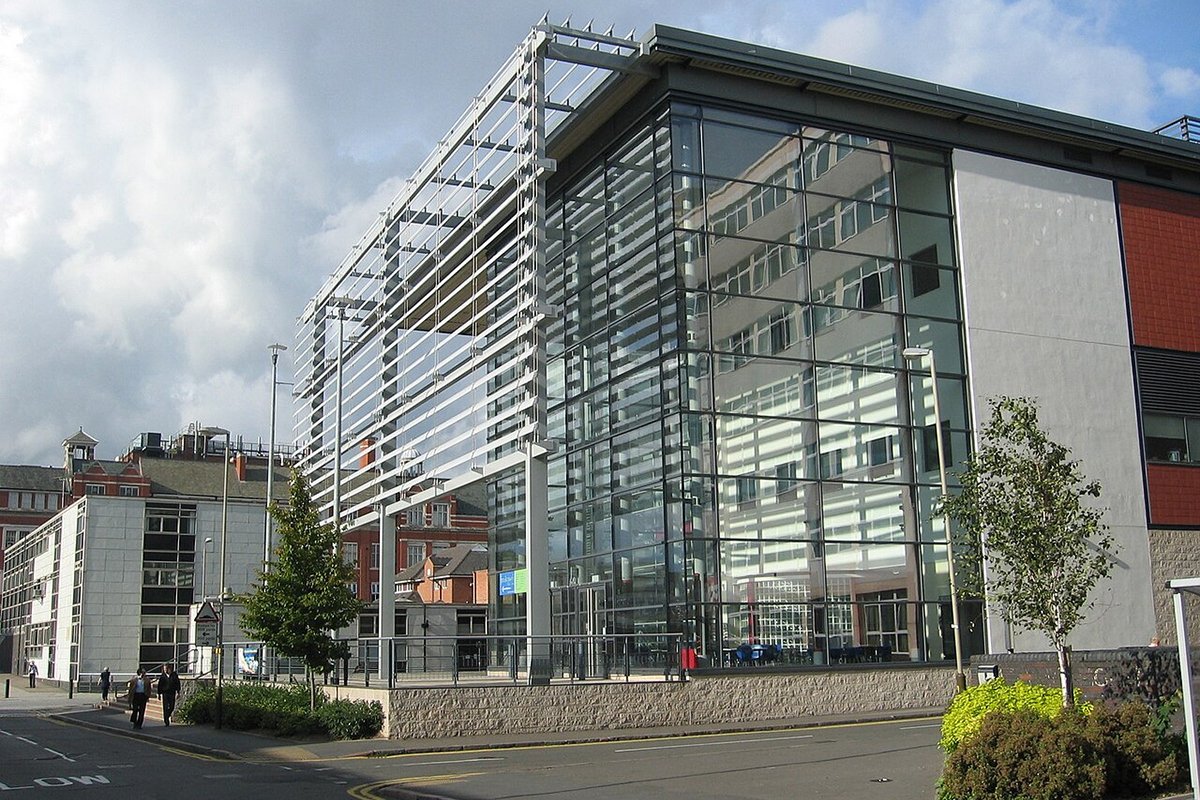
Academics at De Montfort University Leicester (DMU) have had to become used to uncertain and ever-changing working conditions, not all of which are favourable to staff and the university’s reputation.
I’ve worked at DMU for many years now and have been left with the blank satisfaction of having made it to the other side of multiple redundancy processes. On Thursday 7 October, we began the latest round of job cuts, with an announcement of a voluntary severance scheme. This all makes me wonder: what’s the point anymore?
Research is now underfunded and under-resourced, while teaching has been adversely affected by intensive teaching formats. Academic staff have found increasing and unnecessary bureaucracy adds to their workload, while national pay awards have been well behind the rate of inflation for years. All of this impacts staff morale and wellbeing.
DMU: a pessimistic outlook for the future
A new academic year has just begun; the summer at De Montfort University has been somewhat peaceful and in my department at least; we aren’t actively being pursued for redundancy at the moment, but the clouds are gathering ahead of what surely will be another aggravating and traumatising academic year.
DMU recently went through some serious restructuring and the presence on campus of the interim Director of Change and Effectiveness has suggested that further moves may be afoot. End-of-year emails from faculty leadership carried ominous tones. Recruitment is poor. Taught MA (Master of Arts) programmes are being suspended, a move that rarely sees their reinstatement. Fewer students means plummeting staff-student ratios, the anchor for many a redundancy process over the years.
Morale across the institution has been somewhere in the non-existent-to-terrible range for as long as I can remember; indeed, I struggle to recall a time when my team and our colleagues felt optimistic.
Loss of expertise and reputation
Our department was legitimately one of the best programmes in the country. People used to come to DMU to study with us. DMU marketing used to promote our work to show the world all the important things we were doing.
My department is operating with significantly fewer staff than we did a few years ago. We’ve lost so much expertise that it feels almost impossible to brand our programme to attract students who want to study our subject area. By my reckoning, my area has lost something in the region of 400 years of experience and expertise during these processes.
This deterioration has expedited in the last four years, however, and for me, one reason is a result of block teaching.
Block teaching: DMU head claims success
A more traditional approach to teaching involves students taking a number of different modules each semester with assessments interspersed throughout the modules. This allows for an ongoing feedback loop to evolve where a student has the chance to improve their work from their tutor’s feedback.
Block teaching is more intensive. The DMU website explains: “The approach, introduced across all DMU courses in the 2022/23 academic year, enables students to study one module at a time in focused blocks rather than juggling several subjects simultaneously.” There are two blocks each semester, making four modules in each academic year (12 in all for a degree).
The University Leadership Board boasts of strong National Student Survey (NSS) results and claims that this is a result of the move to block teaching. Professor Katie Normington, Vice-Chancellor, said: “We had indications – and a lot of verbal feedback from students themselves – that block teaching was helping students to focus,” …and that … “these results have shown us that those students who have been taught entirely within the block model have performed better …”
A headache for teachers, reduced quality for students
In addition to removing the ongoing feedback element of undergraduate study, block teaching has created additional stresses for staff; some of these have been publicly reported. Marking times have been reduced, for example, putting even more pressure on staff who are, in many cases, trying to prepare to teach in consecutive blocks.
Block teaching has also meant that courses no longer offer different options for students: every student takes the same modules at the same time each year. One consequence of this is that fewer teacher-scholars are needed. If a three-year degree only has 12 modules, with only three running at any one time, workloads can be compressed quite neatly. In some areas, colleagues don’t even get twelve subject-specific modules anymore; two generic modules are taken by all students across the faculty.
Recruitment: impact on student numbers
A recent email from our new Global Marketing Officer noted that our 2026 summer recruitment had failed to meet its targets, but the reality is that recruitment has been a challenge at DMU for a while now. I remember seeing cohorts close to triple figures in my degree programme. Now we struggle to fill a classroom. We have tried, repeatedly, to work with our marketing and outreach teams who all too often manage a brief email exchange before any useful information has been shared with us. We offered to reach out personally to local schools to try and meet potential students in the high schools and colleges in Leicester and the surrounding areas. Marketing refused to share contacts with us.
They did, however, add more open days. It is noteworthy that colleagues now cover almost as many open or applicant days as they spend teaching actual modules. Marketing seems to be passive, with no direct outreach. And so we are left with whatever potential students might stumble upon our campus at an open day and the very small number of students who book in ahead of time.
New research institutes sell staff short
The one part of the job that has always been a safe haven has been my research. I have long been able to bury myself in the topics that I chose within my subject area over the course of a relatively long academic career to date. I’ve been fortunate to have received some support for my research activities over the years, but in every case my university travel has not fully covered my trip and I have had to reach into my own pocket.
The decision was made by a recently appointed Deputy Vice-Chancellor (DVC) of Planning, Research and Innovation to create research institutes which ostensibly were designed to support ongoing research at an institution that prides itself on research-informed teaching.
Within weeks of appointment, multiple institute heads were placed at risk of redundancy with a voluntary severance scheme in November 2024. Colleagues have had to apply for research time and many, myself included, have been given ‘associate membership’, the equivalent of half a day per week for research. What exactly am I supposed to do that will take half a day a week? The act of research requires time and space for thinking and debating ideas. Further, my application for full membership (one day per week) was rejected.
Follow the money
Despite these issues, one cannot deny that higher education has long been savaged by right-wing media and governments over the last 30 years. At DMU, we had the means to weather the storm. We all remember the “strong financial outcome and good reserves” topping £150mn that the university held prior to the last round of cuts. Rather than use these reserves to protect DMU Leicester, the university leadership team decided to invest in DMU internationally and domestically: London, Dubai and more recently, Cambodia and Kazakhstan.
Our union branch newsletter Unionise has noted the extent to which our university leaders spend enormous sums on travel, questioning the strategic significance of the trips they make around the world. This information is publicly available: over £8,000 for air travel to Manilla, just under £120,000 in expenses by the head of DMU Dubai from 2025-2026 are just two examples. And for what added value to DMU or DMU Dubai?
Managerial salaries have increased: the annual accounts show how the institution’s top earners list swells from year to year (2012-2013 highest earner: £150,000-£159,999; 2024-2025 highest earner: £260,000 to £264,999).These are pay rises that those of us doing the essential work of the institution – teaching and research – never see.
It is easy to foresee a situation where, ultimately, DMU Leicester exists only for the accreditation of degrees delivered elsewhere.
Mental health and an uncertain future
Speaking for myself, but acutely aware that this also applies to dozens of colleagues, my mental health has been seriously affected as a result of workplace stress. I continue to fight through my anxiety and burnout, but I can’t quite explain why. Why don’t I just go to the doctor and tell them how badly my workplace situation has impacted my mental wellbeing? Is it because I know that in my absence, my colleagues will be given more work to cover for me? Is it because I anticipate receiving even worse treatment upon my return? Is it because checking in with the DMU online wellbeing support feels so patronising that it might actually exacerbate my symptoms?
All of this has left academic staff in a desperate position. For my part, I expect to be involved in yet another redundancy process this academic year. It’s aggravating to witness the collapse of UK higher education, and even more so when one considers the way that the DMU leadership has made it all the more unpleasant through the ways it is very visibly destroying everything that we all worked so hard to create.
De Montfort University Leadership Board have been approached for comment.
DMU Leicester faces a new threat from DMU Dubai

De Montfort University Leicester now faces new challenges: legal and financial threats from its former partner, Study World in Dubai
Read moreDetailsStudents left in the dark: DMU’s lack of consultation on cuts

With a host of issues coming to light, students at Leicester's De Montfort University have taken it into their own...
Read moreDetails
Bylines Network Gazette is out!
The latest Bylines Network Gazette is out now. Become a Friend of Bylines Network or upgrade to a paid Substack subscription, and you will get access to a vital collection of citizen articles and stories.
Journalism by the people, for the people.


