



In November 2024, the Times Higher Education Supplement reported that by the end of the year, 100 of Britain’s 140 universities would be making job cuts. After previous redundancies in 2022, De Montfort University (DMU) has re-joined this list, with well over 100 jobs across the university under threat. As a result, on 23 May 2025, the DMU Professoriate passed unprecedented motions of no-confidence in the vice-chancellor and executive board. How did it come to this?
The idea that universities should run like businesses might seem common sense to some. In practice, it is anything but. Because it encourages executives to look only at what might (theoretically) be profitable anywhere in the world, the international business model has been particularly disastrous for DMU and the city of Leicester.
De Montfort – a civic university
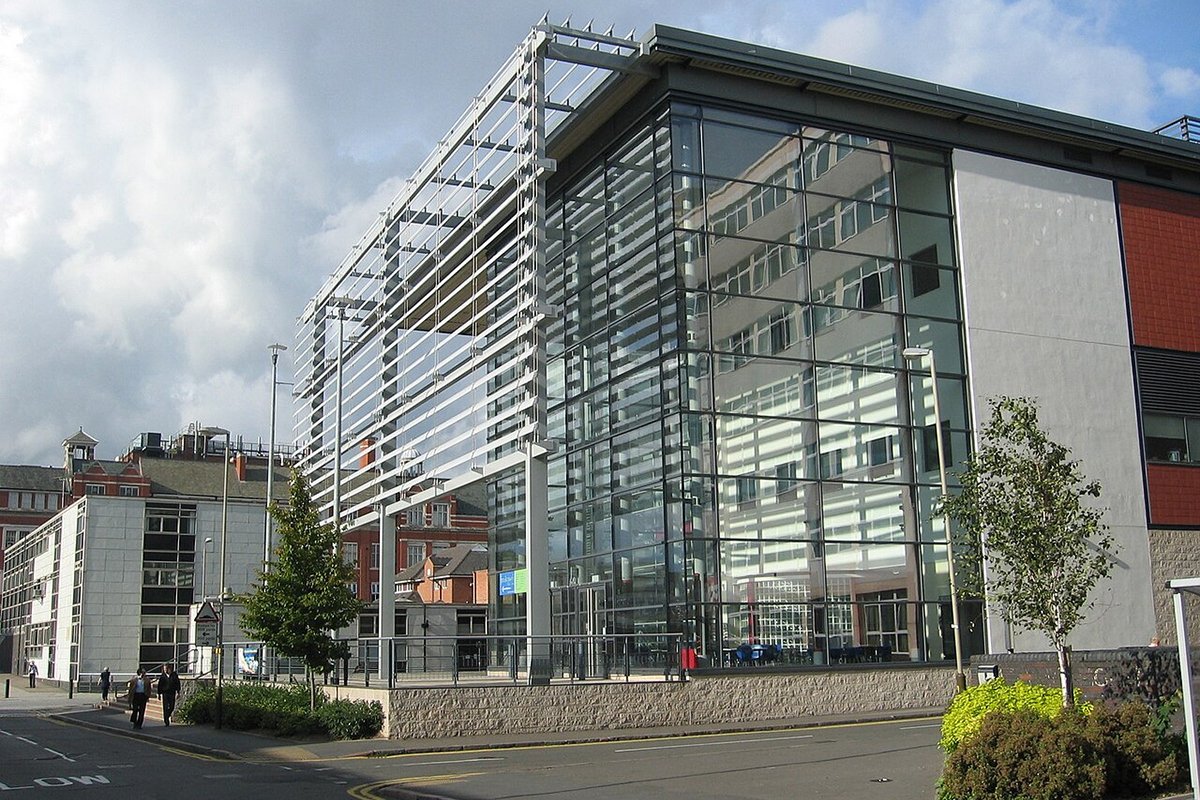
DMU is a former polytechnic, becoming a university in 1992 and situated in the heart of Leicester. It has been a vital economic and community resource, proudly calling itself an ‘anchor institution’. Unlike footloose businesses, an anchor institution is a permanent, dependable feature of the urban landscape. It can be relied upon to bring students to the city, contribute to a circular economy and provide a living for thousands. DMU also embraces the role of a ‘civic university’, pledging to work for the “benefit of local people and the prosperity of our places”. Civic universities enhance community wellbeing, a role of special importance in cities like Leicester with high levels of post-industrial deprivation.
The story of this article is the betrayal of these missions. Much has rightly been made of government hostility and neglect towards universities. However, the role of university executives in fuelling the current crisis has been overlooked. In Leicester, the DMU executive has betrayed its core mission to such an extent that it is not only sacking staff across the institution, but ripping up the anchor and asset stripping the city.
Crisis at De Montfort
In the years before the pandemic, DMU aspired to join the elite ‘top 30’ universities. It had successes, winning a coveted gold award for teaching excellence. It invested in academics and research institutes, whilst venturing hard into the bond markets. In 2012, to finance campus redevelopment, it took on a 30-year bond at the extortionate interest rate of 5.375%, a £5mn annual drain on university finances.
DMU seemed to be doing well, and able to cope with the debt, but warning signs were there. The vice-chancellor (VC) who championed the ‘top 30’ strategy was forced out in early 2019. Shortly after, DMUs position in the league tables collapsed. Then the pandemic hit. At the same time, hostile government policies have made it much harder for a small post-92 university to recruit students from home or abroad.
The current VC was appointed in late 2020. They quietly abandoned the ‘top 30’ strategy and began a programme of retrenchment that has left the university unrecognisable. The window-dressing of aspiration was replaced by defeatist messaging about the “wintering” of universities, which “aren’t really wanted” (VC staff email, December 2024). Instead of defending the institution and the public purpose of universities from political attack, the executive repeatedly exaggerated the depth of the financial crisis to justify waves of restructuring, massive cuts and disinvestment from the city.
Speculation, junkets and asset stripping
The expansionary and aspirational model of the 2010s gave way to permanent austerity at DMU Leicester. But not for everyone. As they launch another swingeing round of cuts in Leicester, university executives are investing millions in franchise operations in London and overseas, including Dubai, Kazakhstan and Cambodia. To service these high-risk, unproven entities, they incur lavish expenses, including business-class flights costing thousands of pounds. Since 2022, executives on the University Leadership Board have claimed expenses totalling £277,551.51, tallied from declared expenses. We were appalled to be told that this sum is on a par with the entire budget allocated to the university’s impoverished research institutes. Staff increasingly have to fund their own research and we are not allowed basic catering for events. But for some causes and some executives, money is no object.
Worse still, executives recently established a subsidiary, Innovative Educational Partnerships Ltd, with themselves as directors. Staff at DMU London will be employed by this entity, not the university. The central purpose is for executives to evade national agreements and hire staff on inferior terms and conditions. Meanwhile, DMU Leicester is left underinvested, understaffed and threadbare.

A governance divorced from everyday university life
At the heart of the DMU crisis is an executive clique led by the VC, with enormous power and infused with a business ethos of detachment. They live different lives, speak a different language and have different priorities from the people they manage. For them, the profit imperative comes above any duty to people or place and justifies them taking money from Leicester to speculate in richer cities.
In response to a recent staff survey, the VC acknowledged the problem, whilst fundamentally misreading it. “You have told us that as employees you don’t feel your voice is heard, that we are not informing you well about future plans, that reasons for change are not well communicated, and that together these things mean you don’t think the university is being well led.” (VC Staff memo). This is all true, but poor communication is not the main problem. It is the whole direction of travel, the legitimacy and credibility of decision-makers, the underlying business ethos and iterative disinvestment from DMU Leicester in favour of warmer, wealthier climes.
Presiding over this scandal is a board of governors to whom the VC is formally accountable. This entity is remote and very rarely communicates with ordinary staff. When it does, it treats us to lectures on what it claims is the “good governance” of the institution (recent board of governors memo to all staff). Delusions of competence and propriety leave the governors burying their heads in the sand, fiddling while DMU burns, and complicit with what can only be described as a morally corrupt executive. This whole approach amounts to economic, civic and moral dereliction, betraying thousands of staff, the City of Leicester and its people.
Death to the business university?
An off-ramp is urgently needed if the institution is to survive the next few years in recognisable form. This is entirely feasible. Campus trade unions have long argued that the VC exaggerates the financial crisis, while the executive hoards excessive cash reserves. They argue that DMU Leicester is being set up to fail. The DMU Dubai website gives the game away. In contrast with the VC’s gospel of financial doom, it boasts that “DMU Dubai is operated by DMU Leicester, which has a strong, secure financial position”.
The UK government says that it is committed, above all, to growth, and to reducing regional inequalities afflicting the country, particularly cities like Leicester. It warns university executives that: “A hard rain is going to fall on universities that continue to be so blasé about executive pay increases while letting down students. The days of the unaccountable ivory tower are over.”
However, the problem goes far beyond executive pay. If they are serious about drawing investment to cities like Leicester, national and local politicians need to wake up to the daylight robbery occurring right under their noses. Every economic textbook says that cities need healthy universities, as anchors, to achieve equitable growth. DMU-style disinvestment, capital flight and asset stripping directly sabotage the government’s agenda and the goals of the city mayor, Sir Peter Soulsby. This needs to be recognised for the scandal it is and properly investigated.
Preserve DMU as a civic university
We badly need help in winning our university back. No more franchises in London or overseas. No more consultants and business class fares. We need to believe in our campus and our city and we feel betrayed. The civic purpose of the university is to work for its employees and the city. We urge the city mayor, councillors and other civic leaders to step in. Please recognise the damage, and pressure the executive to plough all university resources back into the campus and the city, regardless of whether it is deemed profitable. This is an imperative for our survival and to restore the civic university to its proper place in service of the city and its people.


