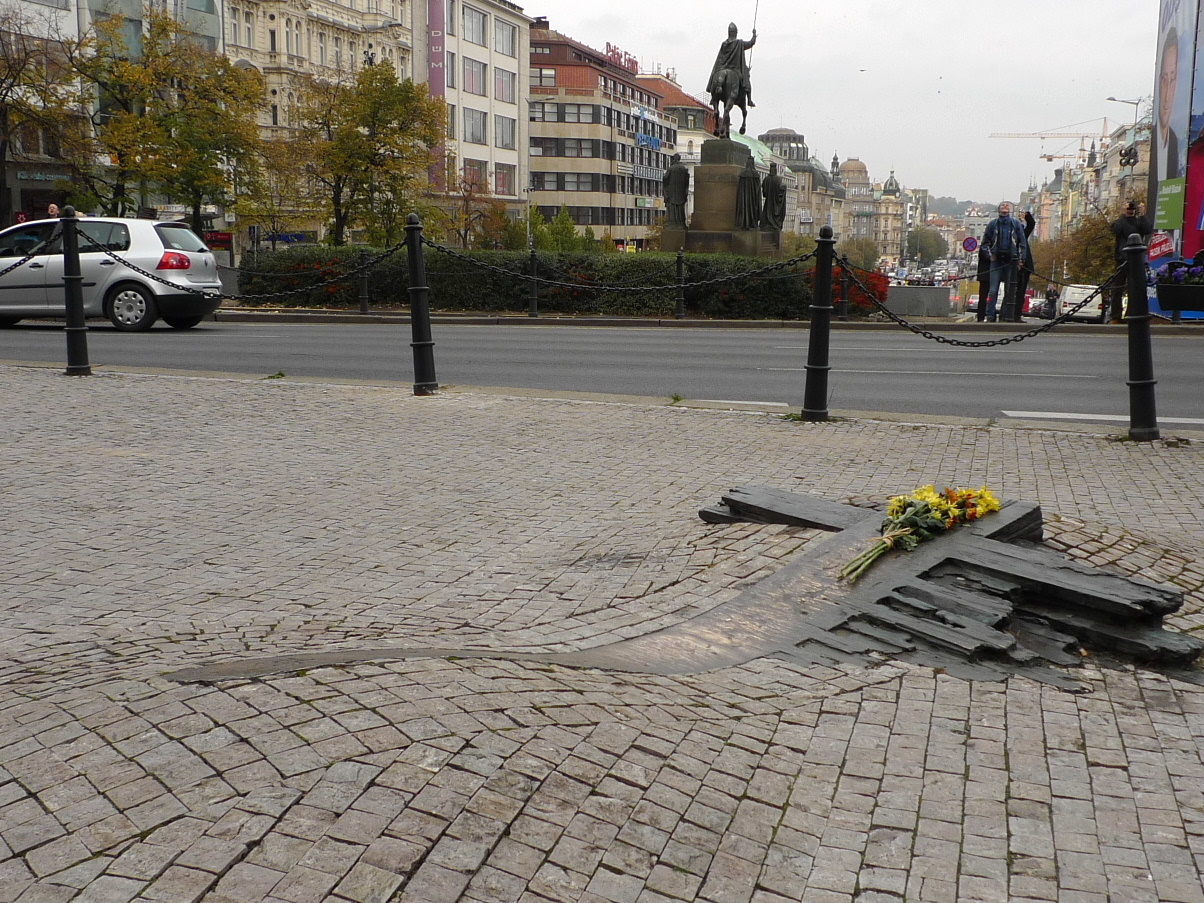
The Prague Spring ended on 21 August 1968. I have friends in the city and it’s a day they still recall. It was a sobering moment for those alive at the time: the Cold War was at its height and for a while, it seemed possible that a repeat of the Cuban Missile crisis was about to unfold.
Socialism with a human face
In 1968, Czechoslovakia (as it then was) was undergoing transformation. Behind the Iron Curtain since 1945, as a Soviet satellite state it was forced to obey Soviet Communist Party diktats, especially on the economy. Press and personal freedom was also heavily restricted. But Antonín Novotný, the Czech leader, was unpopular and his insistence on following Moscow’s line led to student protests and his eventual removal from power in early 1968.
His successor was Alexander Dubček. Though a communist, he was a reformer who recognised the challenge to the state if the population was unwilling to comply. Consequently he began to implement a series of more liberal policies, called ‘socialism with a human face’. It became easier to travel, buy consumer goods and – perhaps most famously – the press gained greater freedom. This last initiative saw writers and journalists openly examining the state of the country and the treatment of those with ideas critical of communism.
To begin with, the Soviet leadership was uncertain how to respond. Eventually it became concerned that what was happening in Czechoslovakia represented a weakening of the Eastern bloc. Attempts to mediate and find a compromise failed and the Soviet leadership took a harder line, threatening intervention in any of its satellite countries that challenged the purity of Marxist-Leninism and tried to democratise. Their patience finally snapped and on 21 August, the tanks rolled into Prague.
Resistance and business as usual
The response from the western democracies was muted. The USA was embroiled in Vietnam while France was convulsed by student protests and civil unrest. The UK uttered a lot of vocal criticism and then, like most of Europe, went back to business as usual. In Prague though, the reaction was very different. People took to the streets in vast numbers. Some engaged in civil disobedience and made life as difficult as possible for the invaders. Others sought more violent reprisal. My Czech friends tell tales of returning to the capital and being held by the authorities while those with weapons were hunted down.
The most dramatic gesture of defiance was that of Jan Palach, who set fire to himself in Wenceslas Square in January 1969 in protest. I have seen his memorial in the Square which is still honoured by Czechs and I found it incredibly moving. His was one of several similar acts across Eastern Europe. Although there would be no immediate change to the occupation, their example helped expose the moral emptiness of totalitarianism.
While the anniversary of the event is still marked in Czechia, as it is now called, it passed almost unnoticed outside the country. We in the west should be more interested. Putin’s war in Ukraine is a stark reminder of the behaviour of those with vested interests, whether they are hard-line communists, greedy oligarchs or free-market libertarians (‘market anarchists’ as they are sometimes known). They all share the same authoritarian instinct – a rejection of democracy and a ruthless determination to exploit and hang on to their gains, no matter what the cost.

Latin American test bed
Latin America sometimes seems a testbed for these upheavals. In 1970, Chile – seen as a model for democratic government on the continent – elected a left-of-centre government led by Salvador Allende. In 1973, it was overthrown in a military coup and descended into more than a decade of violence and repression. Tens of thousands of Chileans disappeared. The documentaries of Patricio Guzmán provide a very personal account of these events.
In 1988, the country started back on the road to democracy when voters rejected the coup leader Augusto Pinochet, in a referendum on a new constitution designed to confirm Pinochet in power (vividly imagined in the 2012 film No, directed by Pablo Larraín). More recently, Chile elected Gabriel Boric as president, a former student radical and also someone with a decidedly left-of-centre view.
Elsewhere in Latin America, more countries seem to be growing tired of exploitation by vested interests. Last year, Brazilians re-elected their former president Lula da Silva, in spite of his libertarian predecessor Jair Bolsonaro convicting him of corruption. In Guatemala, recent elections have seen the anti-corruption candidate Bernardo Arevalo elected as president. In Ecuador too, a left-of-centre candidate has been chosen to contest the presidency, in spite of violent attempts to disrupt the process. Time will tell whether these countries will suffer the same fate as Chile.
Lessons we can learn
The story of the Prague Spring tells us that repressing people and bullying them into submission won’t work indefinitely. Generally speaking, they prefer fairness and equality to inequality and repression. But that will only be possible if people refuse to accept the alternative and speak out against it.
That refusal is becoming increasingly obvious in the UK. From climate change to sewage in our waterways and Brexit, people no longer trust their government. The fightback here is gathering strength.